
I was looking at a weird on-chain pattern the other day and it pulled me deep into Solana’s transaction flow. At first it felt like peeking behind the curtains and wondering who set the stage. My instinct said something was off with how fees and memo fields were reported on some explorers. Okay, so check this out—there are explorers that surface raw data and ones that try to tell you a story. Whoa!
Solana moves very fast compared to Ethereum and older chains. When you watch transactions in real time you see how parallel processing and TPU-like performance change the way wallets interact. That alone demands a different kind of explorer. I rely on Solscan daily when debugging or teaching on-chain behavior. Really?
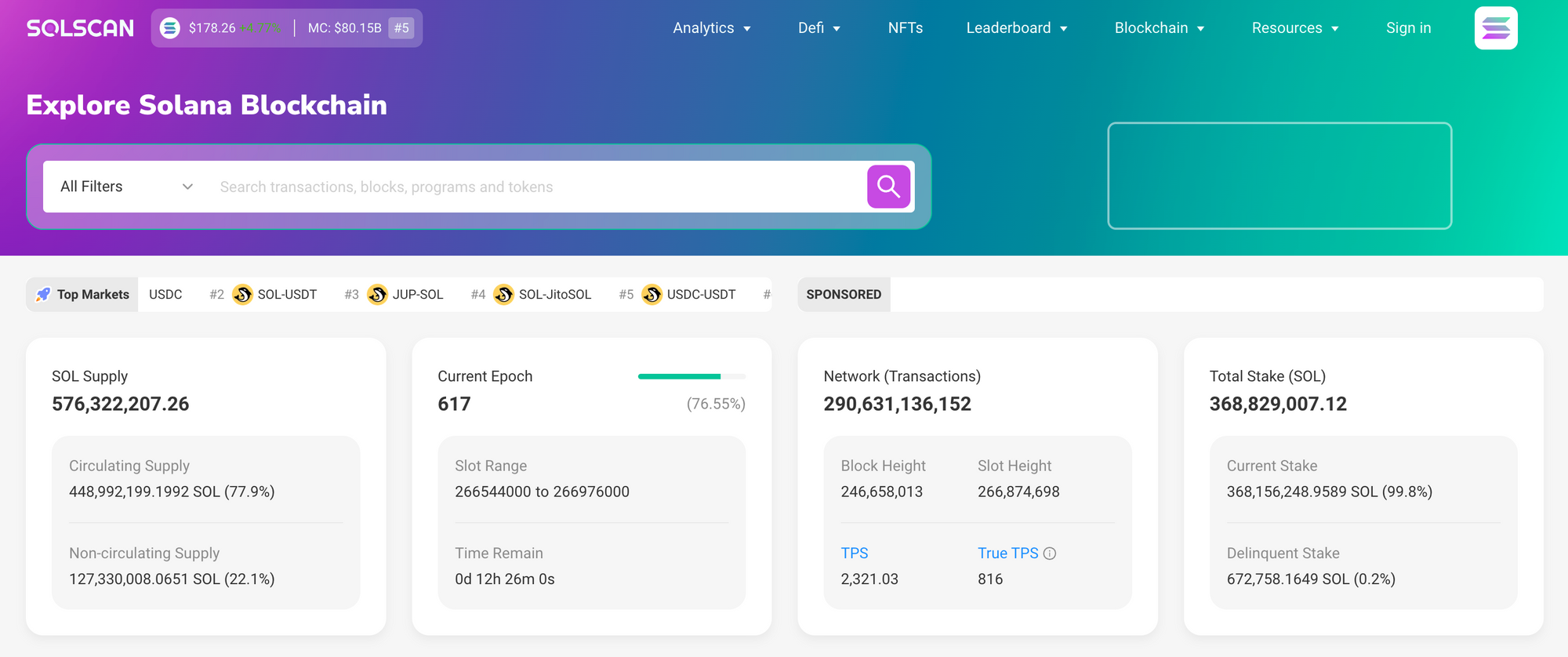
For clarity, I’m talking about the solscan explorer official site when I say Solscan, because accuracy matters and there are look-alikes out there. It surfaces transaction details, token transfers, program logs, and NFT mint histories in ways that help me troubleshoot and teach. On a practical level, the UI gives filters that matter—by program, by signature, by slot range—and that saves time. Sometimes the data is messy though. Here’s the thing.
NFT tracking on Solana is still evolving and standards keep drifting. My first pass reaction was excited because the transaction traces showed more metadata than I expected, which is useful when provenance matters. But then I noticed edge cases—wrapped tokens, inner instructions that barely show up, and lazy metadata standards that break assumptions. On one hand the explorer surfaces mint transactions cleanly. Hmm…
On the other hand, you still need to cross-check program logs to confirm what happened inside a complex meta-transactions bundle, and that takes patience. Initially I thought the explorer should do more automated labeling, but then I realized—automatic labels can mislead if they are overconfident. So I adapted my workflow to include more cross-checks and manual log reads. Now I usually start with the signature view to confirm the basic transfer, then drop into logs for inner instructions, and finish by checking token metadata for NFT mints. Wow!
That triage method reduces false positives when tracking suspicious transfers or rug-like behavior. The NFT tracker features are the part I use when I’m teaching or auditing drops. They help me answer questions like who minted this, what fee tier was used, and whether royalties were set correctly at mint time. I’m biased toward tooling that helps devs and collectors understand governance and fee mechanics. Seriously?
Practical tips for using an explorer as your single source of truth
Start with the transaction signature and timestamp to establish order. Then check the program logs for inner instructions, because a single user-facing transfer can hide multiple program calls. Use token transfer filters to separate SPL transfers from SOL transfers, since fees and lamports show up differently. When you track NFTs, always pull the metadata account and compare the URIs to on-chain hashes if provenance is critical. If something looks off, copy the raw logs and paste them into a local JSON viewer—trust but verify.
FAQ
Can I rely solely on explorers for forensic work?
Short answer: not entirely. Explorers like Solscan are excellent first-pass tools for visibility and pattern recognition, but for deep forensics you should cross-check RPC responses, run your own node if feasible, and validate metadata on IPFS or Arweave. Explorers speed up investigations, but they aren’t substitutes for raw chain access in adversarial situations.
How accurate is NFT mint tracking on Solscan?
Pretty reliable for standard mints, and improving for more complex flows. Standard candy-machine and Metaplex mints show clear traces and metadata links. The weaknesses show up with nonstandard mint programs and when off-chain metadata isn’t pinned properly. My workflow: use Solscan to find the signature, read inner instructions, then fetch the metadata account to confirm the mint authority and URIs.
What’s your favorite unseen feature?
The program log viewer. It reveals inner instruction sequences and debug prints that most UIs hide. When I teach, that view is what turns abstract concepts into tangible sequences you can point at. It bugs me when explorers overlabel without giving the logs—labels are convenient, but logs are the truth.